Blog

  • Access vs capability gap

    The question has shifted.

    Twelve months ago, executives were asking whether to adopt AI tools. Now they’re asking why their teams aren’t actually using them.

    I’ve been in that room more than once lately. GitHub Copilot licensed across the org. Cursor installed. Claude available. A CTO who can’t name a single team that’s genuinely changed how they work.

    This is the part the strategy decks skip.

    Buying access is not the same as building capability. The gap between those two things is where most AI investments quietly stall — not with drama, just with underuse, vague skepticism, and budget conversations that look fine until someone asks what actually changed.

    Most organisations don’t need another tool. They need to understand what’s blocking the ones they already have.

    The leaders I’m watching with interest aren’t asking “what should we add?” They’re asking: what would it take for one team to genuinely work differently? Start small. Make it real. That’s the proof of concept that actually travels.

  • Agents in the Wild: How Autonomous AI Will Reshape Work

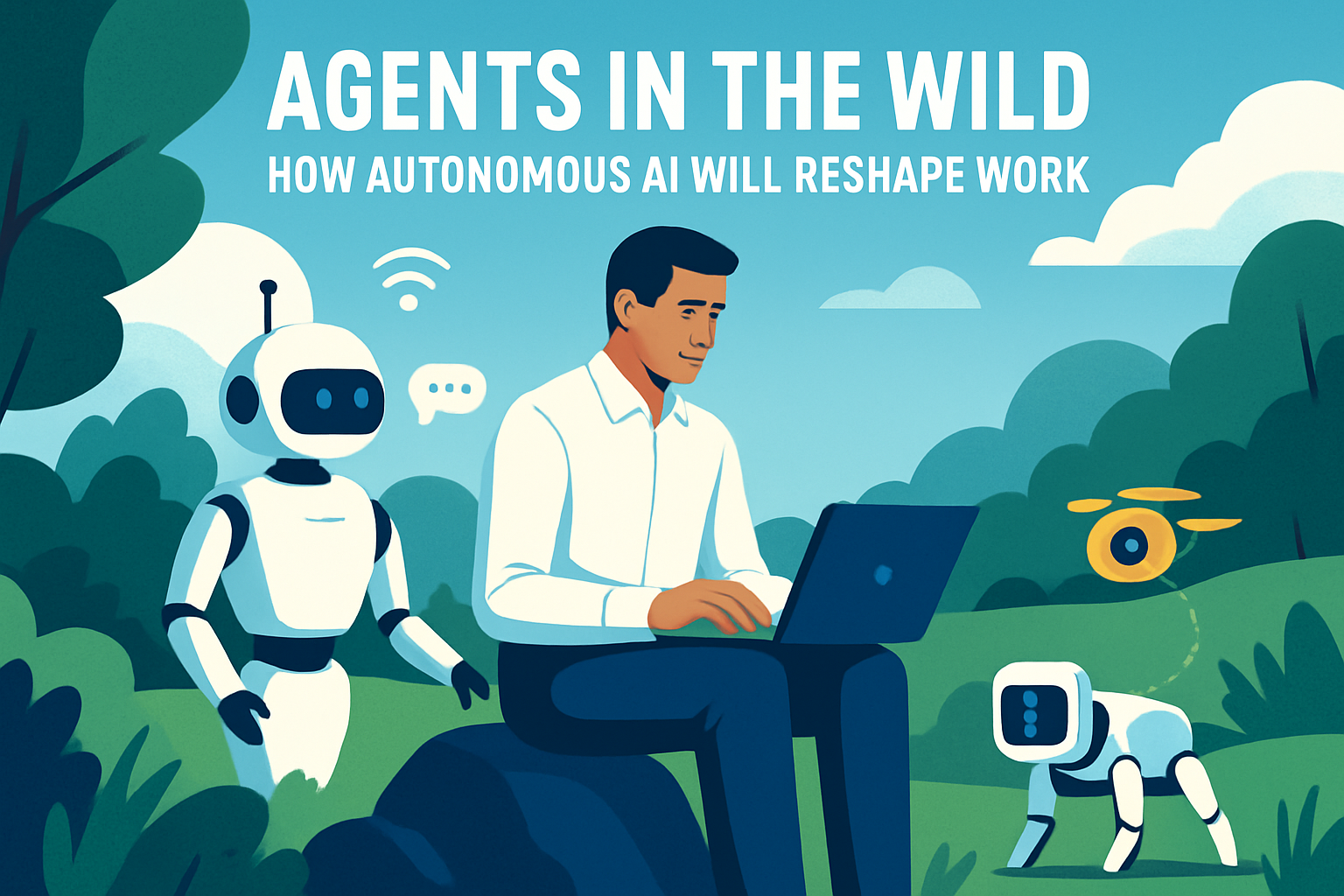
    Agents in the Wild: How Autonomous AI Will Reshape Work

    Not long ago, artificial intelligence was something we interacted with through tightly controlled tools: a chatbot that could answer questions, a productivity assistant that generated text or code, an app that helped automate a narrow task. These were safe environments, where the limits were clear and the expectations managed.

    But now, we’re entering a new phase. AI is no longer confined to sandboxes. Agents are moving “into the wild”, operating in live environments, interacting with other systems, and taking initiative on behalf of their users or organizations.

    This is more than just an evolution in technology. It’s a shift in how work itself is organized, how companies operate, and how leaders think about responsibility and trust.


    From Tools to Colleagues

    For decades, we’ve designed software as tools, things we pick up, use, and put down. AI agents break this pattern. They can act continuously, monitor environments, and even collaborate with other agents. Instead of waiting for a human prompt, they anticipate, adapt, and execute.

    This means we will soon experience the workplace not just as humans collaborating with humans, but as humans and AI agents working side by side. The first wave of these agents will be specialized, scheduling meetings, analyzing data streams, drafting reports. But the real impact comes as they begin to chain tasks together and make decisions in uncertain environments.


    The New Organizational Operating System

    Think about how companies were transformed by ERP systems or the shift to the cloud. These technologies didn’t just make processes faster, they changed how organizations were structured. AI agents will do the same, but at a more granular and pervasive level.

    Instead of workflows being designed from the top down, we may see them emerge dynamically as agents coordinate tasks among themselves. This is a world where:

    • Agents negotiate contracts and prices in supply chains.
    • Internal knowledge is surfaced and synthesized without a human ever “asking.”
    • Entire project drafts are prepared overnight while the team sleeps.

    Work will feel less like executing a process and more like guiding and orchestrating a constantly shifting system of human–AI collaboration.


    Trust, Autonomy, and Risk

    When agents move into the wild, the stakes rise. We’re no longer just asking, “Can this AI generate a good output?” but “Can I trust this agent to act on my behalf?”

    Leaders will need new governance models to decide:

    • What kinds of decisions can be delegated to agents?
    • How is accountability shared between human managers and digital colleagues?
    • What guardrails ensure safety without stifling innovation?

    In many ways, this mirrors the challenges of human delegation. The moment you trust someone else to represent you, you take on risk. The difference is that agents don’t get tired, don’t have agendas, and can scale infinitely. That makes them both powerful and potentially disruptive.


    Cultural Shifts Beyond the Tech

    The bigger challenge won’t be technical but cultural. Companies will need to adapt to the idea that “the way we’ve always done things” may no longer be relevant. Leadership will shift from managing people to designing human–AI systems. Teams will need to learn how to communicate with agents, how to audit their work, and how to build trust in digital colleagues.

    Organizations that succeed will treat agents not as replacements, but as amplifiers of human capability — extending creativity, decision-making, and problem-solving in ways we can’t yet fully imagine.


    The Path Forward

    We are at the beginning of this shift. The companies that thrive will be the ones that:

    1. Experiment early with agents in controlled but real-world contexts.
    2. Build leadership and cultural capacity to embrace human–AI collaboration.
    3. Establish governance principles that balance autonomy with trust.

    At Managed Wisdom, this is where we focus: helping organizations not just adopt new technology, but rethink the way they innovate, lead, and work together in an era where the boundaries between human and machine blur.

    The wild is coming. The question is not whether agents will change your company — but how ready you are to guide that change.

  • Design Thinking: The Craft of Making Ideas Work

    Design Thinking: The Craft of Making Ideas Work

    At Managed Wisdom, we believe that ideas are only as valuable as the way they are brought to life. In a world of accelerating change and complexity, innovation is no longer a luxury, it’s a necessity. But innovation without direction quickly turns into noise. That’s where Design Thinking comes in.

    Design Thinking isn’t a buzzword. It’s a mindset, a process, and a bridge between strategy and execution. It’s how we help organizations move from assumptions to insights, from ambiguity to clarity, from ideas to meaningful impact.

    A Human-Centered Approach to Problem Solving

    At its core, Design Thinking is about deeply understanding people, their needs, pains, desires, and aspirations. It’s not about building things right; it’s about building the right things. This human-centered approach underpins every advisory service and strategy workshop we run.

    Whether the challenge is launching a new product, reimagining a service experience, or aligning cross-functional teams, Design Thinking provides a common language and structure for forward movement.

    Different Frameworks, Same Purpose

    There are several frameworks under the Design Thinking umbrella. Each has its own flavor, yet they all aim to solve the same core problem: how to move from complexity to clarity and alignment, quickly and collaboratively.

    Here are a few we frequently draw upon in our work:

    The Double Diamond (Design Council UK)

    This model splits innovation into two diamonds:

    1. Discover & Define (divergent thinking → convergent thinking)
    2. Develop & Deliver (ideation → implementation)

    It’s simple, visual, and helps teams understand where they are in the journey, exploring the problem or developing the solution.

    Stanford d.school’s 5 Steps

    Empathize → Define → Ideate → Prototype → Test

    This classic model emphasizes fast learning through prototyping and testing, reinforcing a mindset of curiosity and experimentation.

    Google Design Sprint

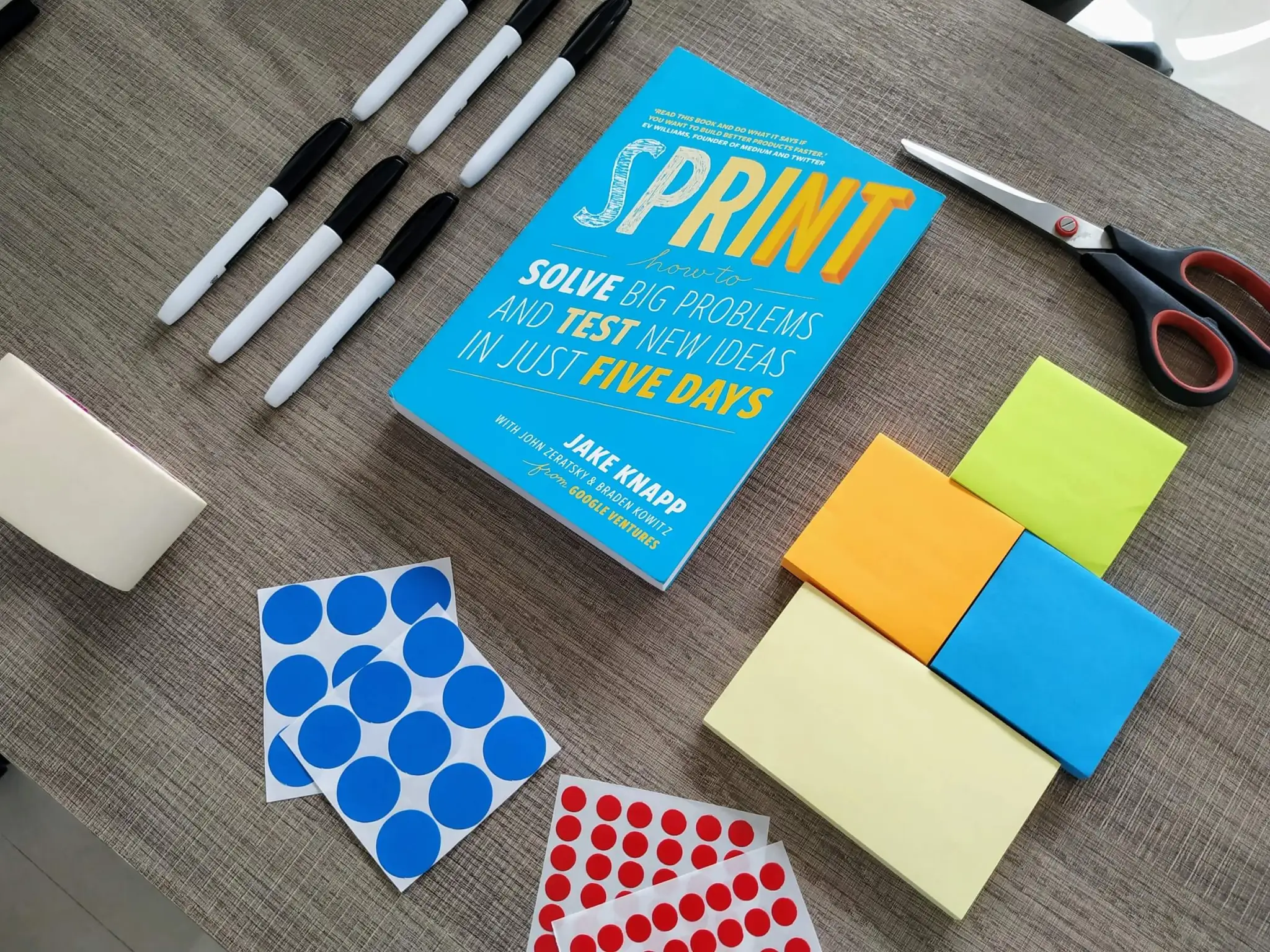
    Developed at Google Ventures, this 5-day sprint condenses months of work into one week. It’s structured for speed: mapping, sketching, deciding, prototyping, and validating. We often adapt this framework to suit longer workshops or leadership offsites.

    LUMA System

    LUMA’s toolkit of 36 methods is pragmatic and actionable. It focuses on how to apply design thinking in real teams, across functions. We often bring LUMA methods into our client sessions to create alignment between people, process, and purpose.

    Design Thinking in the Managed Wisdom Model

    Design Thinking is not a service line. It’s a foundation.

    In our business model, it complements and strengthens every other component, from strategic advisory to organizational coaching and innovation facilitation. When paired with Co-Active Coaching, AI-driven ideation tools, or Decision Architecture, Design Thinking acts as the connective tissue that makes strategies human and execution purposeful.

    Rather than following one rigid framework, we select and combine methods based on your unique challenge. The goal is not to follow a recipe, it’s to craft a solution that fits your context.

    Why It Matters Now

    Organizations today face increasing pressure to transform, adapt, and innovate. But most aren’t suffering from a lack of ideas, they’re suffering from a lack of shared understanding and clear prioritization.

    Design Thinking helps teams slow down to speed up. It creates the conditions where people think together, move forward together, and own the outcomes together. That’s the Managed Wisdom way.

    Let’s Co-Design the Future

    If you’re navigating complex change, exploring new opportunities, or simply looking for clarity in chaos, Design Thinking might be the perspective shift you need.

    At Managed Wisdom, we don’t just run workshops, we guide transformations. With frameworks that flex, and wisdom that scales.
  • The Quiet Revolution: How Automation Is Unlocking Time, Talent, and Intelligence

    The Quiet Revolution: How Automation Is Unlocking Time, Talent, and Intelligence

    In the background of our daily work, something remarkable is happening.

    Emails are sorted. Data is synced. Conversations are transcribed. Feedback is analyzed.
    And no one had to lift a finger.

    This isn’t magic. It’s automation, and it’s quietly transforming how businesses operate, grow, and serve.

    But the true value of automation isn’t in the tools. It’s in what it frees up.


    From Manual Grind to Meaningful Work

    Most teams are drowning in invisible effort, repetitive tasks, lost context, and constant app-switching.

    • A sales team spends hours copying data between tools.
    • A support team answers the same questions, again and again.
    • A leadership team struggles to see the big picture through fragmented reports.

    These aren’t just inefficiencies. They’re taxes on creativity, energy, and focus.

    Automation platforms like n8n and Make.com allow organizations to build smart, visual workflows that connect their tools, streamline their processes, and start to offload these burdens, without the need for complex development projects.

    But when you add AI to that mix? You go beyond automation.
    You get intelligent action.


    AI-Powered Automation: Beyond Efficiency

    When automation meets artificial intelligence, something deeper happens:

    • AI can interpret, not just transfer.
    • It can classifysummarizegenerate, and decide.
    • It can power workflows that adapt in real time to what’s happening in your business.

    Imagine a world where:

    ✅ Customer feedback is automatically categorized and summarized using AI, and sent to the right product owner.
    ✅ Internal meeting notes are transcribed, key actions extracted, and relevant stakeholders alerted, instantly.
    ✅ Sales leads are scored and routed dynamically based on behavior, sentiment, and context.

    This isn’t the future.
    It’s already happening, quietly, scalable, and with tools that most companies already have access to.


    The Real Value of Automation

    Automation isn’t just about speed. It creates value across multiple dimensions:

    • Time: Free up hours each week across roles.
    • Focus: Let humans do what only humans can.
    • Continuity: Build systems that don’t forget or drop the ball.
    • Insight: Turn fragmented data into usable intelligence.
    • Scalability: Grow without increasing operational complexity.

    And perhaps most importantly, it enables a new kind of organizational mindset:

    One where your systems support your strategy, automatically.


    But Where Do You Start?

    The challenge isn’t whether automation works. It’s knowing where to apply it, and how to design it well.

    That’s where Managed Wisdom comes in.

    We specialize in guiding organizations through this journey. Not by selling tools, but by facilitating claritymapping real business processes, and co-creating intelligent systems that reflect your goals, values, and people.

    Our process looks like this:

    1. Discovery Workshops
      We uncover your workflows, pain points, and hidden opportunities. We don’t start with tech, we start with you.
    2. Process Mapping
      Together, we visualize how your work actually happens, and where automation and AI can support it.
    3. Prototype & Flow Design
      Using platforms like n8n and Make.com, we help you build intelligent workflows, connecting your systems, integrating AI, and showing real value fast.
    4. Activate & Evolve
      We don’t just hand over a flowchart, we help you embed the change, coach your team, and scale what works.

    Let’s Build the Future of Work, One Flow at a Time

    At Managed Wisdom, we believe that strategy must lead to systems, and that systems should empower people, not constrain them.

    If you’re curious about how AI and automation could unlock new energy, insight, and capability in your organization, we’d love to show you what’s possible.

    Because when the routine takes care of itself,
    You can finally focus on what truly matters.

  • Beyond the Sprint: The Creative Journey Before and After a Workshop

    Beyond the Sprint: The Creative Journey Before and After a Workshop

    Creativity doesn’t start when a workshop begins, and it certainly doesn’t end when the last sticky note is placed on the wall. While frameworks like Design Sprints and Foundation Sprints provide structure for rapid ideation and problem-solving, the true impact of these sessions depends just as much on what happens before and after the workshop.

    The reality is that a well-run sprint is not just about generating ideas, it’s about empowering people, aligning teams, and sustaining momentum long after the session is over. And this is where the principles of co-active coaching and co-active leadership come into play.

    Before the Sprint: Preparing the Ground for Creativity

    Too often, teams enter workshops without a clear sense of purpose. They might be excited about “being innovative,” but they lack alignment on what truly matters and why they are here in the first place. This is where co-active coaching principles can set the stage for deeper engagement.

    In a co-active coaching approach, the focus is not just on finding solutions but on creating a space where people can explore, reflect, and take ownership of their creative process. Before a sprint, this means:

    • Clarifying Intent – What is the real challenge we are solving? Are we asking the right questions?
    • Aligning Perspectives – Are all voices heard? Are we making space for different viewpoints?
    • Building Psychological Safety – Do participants feel safe to take risks, challenge ideas, and think beyond the obvious?

    Much like an athlete warming up before a competition, the pre-workshop phase is about tuning the mindset of the team, ensuring they enter the sprint not just as participants but as co-creators of the experience.

    During the Sprint: The Power of Co-Active Leadership

    Once the sprint begins, creativity moves from exploration to action. However, this is not just about facilitating a step-by-step process; it is about leading in a way that empowers people to take responsibility for both the problem and the solution.

    This is where co-active leadership becomes critical. In a sprint setting, leadership is not about one person driving the process, it’s about enabling others to step up. True creative breakthroughs happen when teams take ownership of their ideas, challenge assumptions, and work with authentic engagement rather than passive participation.

    Co-active leadership in a sprint looks like:

    • Creating Equal Ownership – Everyone, regardless of role or seniority, has a voice in shaping the outcome.
    • Balancing Action and Reflection – Encouraging teams to think deeply, act decisively, and remain adaptable.
    • Empowering People to Lead – Shifting from a facilitator-led session to a shared leadership model where everyone takes responsibility for making the sprint a success.

    By applying co-active leadership principles, we transform workshops from simple exercises in brainstorming into transformational experiences that drive real commitment and change.

    After the Sprint: Sustaining Momentum and Driving Impact

    Perhaps the most overlooked part of any innovation process is what happens after the workshop ends. Ideas are exciting in the moment, but without proper follow-through, even the most brilliant concepts fade into the background of everyday business operations.

    This is where coaching becomes a bridge between ideation and execution. After a sprint, the focus should shift to:

    • Commitment to Action – Ensuring teams move beyond concepts to concrete next steps.
    • Integration into Daily Work – Helping individuals and teams embed new ways of thinking into their workflow.
    • Sustained Accountability – Using coaching methods to keep people engaged and motivated, turning ideas into lasting change.

    At Managed Wisdom, we don’t just run workshops; we guide the entire creative journey. We help organizations not only generate ideas but also prepare for the process, lead with confidence, and ensure the work continues after the sprint is over. Because real creativity isn’t just about what happens in a room for a few days, it’s about how we carry that energy forward into meaningful, lasting impact.

  • Creativity, Process, and the Human Experience

    Creativity, Process, and the Human Experience

    Creativity has long been romanticised as a flash of inspiration – a sudden spark that strikes when we least expect it. But in reality, creativity is rarely about waiting for a eureka moment. It is a process, an intentional act of shaping ideas, testing possibilities, and refining concepts. True innovation doesn’t just emerge from raw imagination; it comes from structure, discipline, and the willingness to iterate.

    At Managed Wisdom, we believe that creativity is not just an individual talent but a collective process. The most powerful ideas don’t emerge in isolation; they are cultivated through collaboration, feedback, and structured problem-solving. That’s why we apply methodologies like the Design Sprint and Foundation Sprint to help organizations turn creative energy into tangible innovation.

    Structure as a Catalyst for Creativity

    Some may argue that structured processes limit creativity, that they impose constraints on free thinking. But in reality, constraints fuel creativity. The most innovative breakthroughs often come from working within a defined framework. The Design Sprint, originally developed by Google Ventures, is a prime example. It compresses months of ideation, prototyping, and validation into just a few days, pushing teams to focus on solutions rather than endless discussions.

    Then there’s Foundation Sprint, a methodology developed by James Knapp, which takes a step back to deconstruct assumptions, clarify purpose, and align stakeholders before diving into execution. If Design Sprints accelerate solutions, Foundation Sprints ensure that we’re solving the right problem to begin with. The two complement each other, one setting the stage for clarity, the other driving momentum toward action.

    By applying these processes, we don’t leave creativity to chance. We guide it, refine it, and ensure it leads to meaningful outcomes.

    The Human Element of Innovation

    Despite all the tools and processes available, there is one thing that cannot be engineered: the human experience behind every idea. AI can generate designs, analyze trends, and predict market movements, but it cannot replicate the depth of human insight, the feeling of knowing when an idea just “clicks” or the intuition that tells us to pivot in a new direction.

    Creativity is deeply personal. It’s shaped by our backgrounds, our struggles, and our lived experiences. That’s why, at Managed Wisdom, we emphasize human-centric innovation. We don’t just help companies generate ideas, we help them uncover the deeper “why” behind their challenges, ensuring that creativity leads to solutions that are not just novel, but meaningful.

    Making Creativity Work for You

    Innovation isn’t magic. It’s a process that can be learned, practiced, and optimized. Whether through sprints, workshops, or strategy sessions, the goal is always the same: to unlock human potential, not replace it. The future of creativity isn’t about machines doing the thinking for us. It’s about harnessing the right tools and frameworks to make human ideas more powerful, more impactful, and more real.

    And in the end, isn’t that the true essence of creation?

  • The Essence of Creation in the Age of AI

    The Essence of Creation in the Age of AI

    Creativity has long been considered a uniquely human trait, our ability to imagine, transform, and bring something entirely new into existence. But with AI increasingly stepping into the realm of creation, the very definition of creativity is being challenged. The recent advancements in image generation from OpenAI highlight this shift, raising the question: What does it mean to create in a world where machines can generate art in seconds?

    AI as a Creative Partner

    Roger von Oech once said,

    “Creativity is transforming one thing into another.”

    This definition still holds, but AI’s role in the transformation process is evolving. Previously, AI was a tool, a brush in the artist’s hand, an assistant for executing human vision. But today, AI models can generate breathtaking images from just a few words, blending styles, reimagining concepts, and even surprising us with results we didn’t anticipate.

    Does this mean AI is now creative? Or is it merely an advanced mimic, reshuffling patterns it has learned from millions of human-made works? The answer depends on how we define creativity. If creativity is purely the ability to generate something new, AI is undeniably creative. But if creativity involves intent, emotion, and personal experience, then AI remains a collaborator rather than an originator.

    The Unrepeatable Human Experience

    What AI lacks, and what it may never possess, is personal experience. Every human is shaped by their own journey, their struggles, joys, failures, and triumphs. The way we create is not just about combining ideas but about filtering them through the lens of who we are and what we have lived.

    A machine can generate a beautiful painting, but it does not know the bittersweet ache of nostalgia, the thrill of discovery, or the weight of loss. It does not wake up with a burning idea in the middle of the night or struggle with self-doubt before daring to share its work with the world. These raw, personal moments are the true dopamine of creation.

    The essence of creativity is not just the final product, it is the process of interpretation, of making meaning from our experiences, and of infusing something with the uniqueness of our perspective. This is why, no matter how advanced AI becomes, it can never fully replace the artist, the thinker, or the storyteller. Because what we create is not just an arrangement of pixels or words, it is a piece of ourselves.

    Creativity Beyond Output

    Much like the flood of digital content today, AI-generated images risk making creativity feel abundant, even disposable. But true creativity has never been about sheer production, it’s about transformation. The process, the struggle, and the meaning behind what we create are what truly matter.

    At Managed Wisdom, we see this shift in creativity not just in the arts but in strategic thinking. AI can generate ideas, analyze trends, and offer insights, but the real transformation happens in how we use these tools, how businesses and leaders integrate AI into their vision, shape their strategy, and push the boundaries of what’s possible.

    The future of creativity isn’t AI replacing human ingenuity. It’s about how we, as creators and strategists, adapt, refine, and elevate AI’s capabilities. Because in the end, creativity isn’t just about making something, it’s about making something matter. And that, at its core, is a uniquely human gift.

  • The Essence of Creativity

    The Essence of Creativity

    What is the essence of creativity? This question has been my companion for some time now, a puzzle I am eager to solve in a way that aligns with my values and experiences. At this stage of my exploration, one particular definition resonates deeply with me. It comes from the creative thinker Roger von Oech:

    “Creativity is transforming one thing into another.”

    Why does this statement strike a chord with me right now? Like many, I often find myself reflecting on the relentless pace of the world around us. We are surrounded by an overwhelming stream of information, an endless cycle of new products, ideas, and distractions, all designed to feed our insatiable desire for novelty. We chase the next exciting thing, hoping to feel relevant, engaged, and in the moment. But in doing so, we often overlook something fundamental: the process behind creation itself.

    In our obsession with outcomes, we miss the joy of the creative journey. The act of transforming one thing into another, whether it’s an idea into a story, raw materials into art, or experience into wisdom, is where the real magic happens. Creativity is not just about producing something new; it’s about engaging with the world in a way that changes both it and us in the process.

    The Evolution of Creativity

    The way we think about creativity today is a modern construct. In ancient times, creativity was not seen as an individual gift but as divine inspiration. The Greeks spoke of the Muses whispering ideas into the ears of poets and thinkers. The Renaissance shifted this view, introducing the concept of the “creative genius”, a person uniquely capable of innovation, like Leonardo da Vinci or Michelangelo.

    By the 20th century, creativity became democratized. It was no longer reserved for artists and inventors; psychologists and educators argued that creativity was a fundamental human trait, one that could be nurtured in anyone. But have we truly embraced this idea? Or have we, in our pursuit of mass production and efficiency, lost sight of the intrinsic value of creative thought?

    Creativity vs. Innovation

    This raises another question: is creativity the same as innovation? Many use these terms interchangeably, but they are not quite the same. Creativity is the act of bringing new ideas to life, while innovation applies those ideas to create tangible value. One is about exploration; the other, execution.

    Consider figures like Nikola Tesla and Thomas Edison. Tesla was a visionary, dreaming up revolutionary concepts, but it was Edison, the relentless experimenter, who turned ideas into practical inventions. Both were essential in shaping modern technology, yet they embodied different aspects of the creative process. So, where do we place the greatest value? On the raw, unfiltered spark of an idea, or on the ability to make it real?

    Reclaiming the Joy of Creation

    Looking at history, it’s clear that creativity has always been at the heart of human progress. Yet today, we risk treating it as a commodity, something to be optimized rather than experienced. Perhaps it’s time to pause and ask ourselves: are we creating for the sake of transformation, or just for the sake of production?

    The joy of creativity is not in the final product but in the act of making. Whether we are crafting, writing, designing, or problem-solving, the true reward is the process itself. When we embrace that, we don’t just create, we grow, we evolve, we transform. And in the end, isn’t that what creation is really about?

    This perspective is something I bring into the strategy workshops and advisory work at Managed Wisdom. True strategy isn’t just about achieving an end goal; it’s about engaging with the process of discovery, challenging assumptions, and transforming insights into action. In every session, the focus isn’t just on what organizations should do but on how they think, adapt, and create.

    Because whether in business or in life, creativity is the driving force behind meaningful change. And when we embrace it, not just as a tool for innovation, but as an essential part of how we approach challenges, we don’t just solve problems. We shape the future.